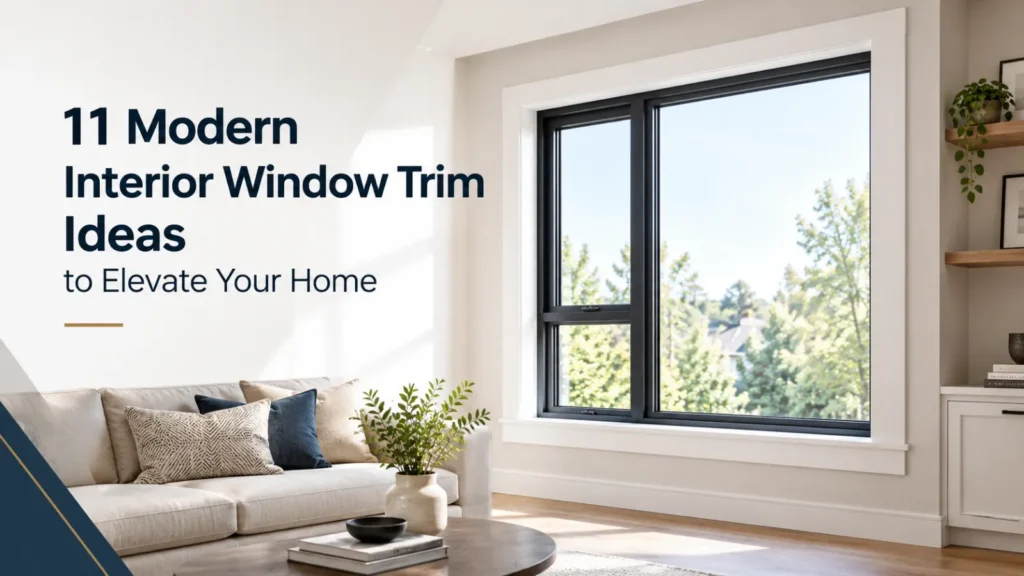

Window trim looks like a minor finishing detail. It isn’t. Change the casing’s width or colour, or swap the material, and the same window takes on a different character, whether that’s crisp and minimalist or a bit warmer and more natural.
And you can freshen up a room with new inside window trim, without necessarily replacing the windows. Sleek flat profiles and bold black casings are two ways to go. Natural wood finishes and wall-matched paint are two more. All of them can work with the décor you already have.
The trick is matching the style to your home’s architecture, wall colours, window proportions, and the other finishes around it. So here are 11 modern interior window trim ideas, covering the main window casing styles, to help you narrow it down and get a more polished, cohesive look.
What Makes Window Trim Look Modern?
Clean lines, simple shapes, sensible proportions. That’s most of it. There are many types of window trim, but modern ones tend to share the same traits. You won’t see heavily decorated profiles. You’ll see flat boards, square edges, quiet contrast, and natural materials.
Minimal isn’t a requirement, though. A wider wood casing can look just as contemporary as a narrow white one, as long as it suits the room. What you want is a window that feels like part of the room and doesn’t look bolted on afterwards.
So what is window trim? It’s the finishing material around a window opening, also called window casing, and it does a real job. Window casing and window trim mean the same thing in most homes, so you’ll see both terms used. It hides the joint where the window frame meets the wall, so the opening looks finished. Some windows also get a sill or apron to complete the installation.
With that in mind, let’s get into the styles.
1. Choose Simple Flat Window Trim for a Clean Look
Want a modern interior without a lot of decoration? Flat window trim is a good place to start, and it’s one of the easiest simple window trim ideas to pull off.
It’s made from straight, rectangular boards with a smooth face and little or no profiling. This plain, square-edged look is also the base of Shaker style window trim. The result is a crisp outline around the window, and it doesn’t pull focus from the rest of the room.
It suits contemporary homes and minimalist interiors, especially when the furniture is plain and the walls are free of clutter.
Narrow boards give a quiet finish. Wider ones give the windows more presence. Which you choose matters less than the execution, because even lines and tidy corners make or break it.
Try this: White flat trim, warm white walls, and light oak flooring give you a bright, understated interior.
2. Keep Things Minimal With Narrow Window Casings
Sometimes the lighter touch wins.
Narrow casings, sometimes called thin window trim, put a slim frame around the window. Natural light and outdoor views stay the main event, along with any other features you’ve worked into the room.
This minimalist modern window trim style fits smaller rooms, where heavy mouldings can feel like too much. It also looks good in apartments and home offices, and in contemporary bedrooms.
Keep the profile simple and the width the same all the way around. Narrow trim can look elegant. But if it’s too small for the window or the wall, it looks unfinished instead of intentional.
Try this: Use slim, square-edged trim painted the same colour as the baseboards for a cohesive look throughout the room.
3. Make a Statement With Modern Black Interior Window Trim
Want your windows to stand out? Try black window trim.
Modern black trim interior designs use dark casings against lighter walls. The window gets a strong outline, and the architecture around it looks sharper.
Black trim works well in contemporary and industrial interiors. It suits modern farmhouse rooms too. And it goes nicely with black window frames, dark hardware, minimalist lighting, and neutral furniture.
Not every window needs to go black. A single feature window in a living room or dining area can be a great focal point.
Look at the whole room before you commit. If nothing else in the space is dark, black trim can feel out of place. And it draws the eye to small windows, which may not be what you’re after.
Try this: Combine matte black casings with warm white walls, natural wood furniture, and a few black accents for a balanced, contemporary look.
4. Bring Warmth Into the Room With Modern Wood Trim
Modern doesn’t have to feel cold. Natural wood warms a room up and keeps things tidy.
With modern wood trim, the grain is the decoration, so you don’t need fancy profiles. Light oak and maple are options for wood window casing, or another suitable wood, finished to suit your interior.
Lighter tones suit Scandinavian-inspired spaces. Darker stains add richness if your flooring or furniture is dark.
Getting the tones to agree is the part people skip. The trim doesn’t have to match every wood surface, but the undertones should sit well together. Warm oak looks right beside warm-toned flooring. Next to a floor with a strong grey undertone, not so much.
Natural wood needs a proper protective finish too, and the look changes with the species and the stain.
Try this: Use clear-finished oak casing around a large living room window, then repeat that wood tone in shelving, furniture, or nearby cabinetry.
5. Match the Window Trim to the Wall Colour
Want a calm room? Paint the trim the same colour as the wall.
With less contrast between casing and wall, the window opening melts into the room. People like it in minimalist interiors, and anywhere the architecture should stay quiet instead of decorative.
White, beige, soft grey, and sage green all work. So can deeper colours. The shade and the amount of natural light decide how it turns out.
Matching doesn’t mean losing detail. A simple casing still adds definition, and it still covers the edges around the window.
Try this: Paint the walls and flat window casings a soft warm grey, then add contrast with artwork, curtains, or furniture.
6. Use Wider Flat Casing for an Architectural Finish
Narrow trim feeling a bit timid? A wider modern window casing gives windows a more substantial, custom look.
The boards are broader, usually with square edges and a plain profile. You get real visual weight, minus the fussy detail of traditional mouldings.
Rooms with higher ceilings, large windows, or open layouts can carry wide casing well. It also pairs with modern farmhouse and Craftsman-inspired interiors.
Proportion is everything here. A wide casing can swamp a small window in a compact room. And a narrow one can look weak around a big picture window.
Don’t pick a window trim width just because it’s popular. Look at the size of the opening, the wall space, the ceiling height, and the baseboards you already have.
Try this: Use wider white flat casing around large living room windows, paired with simple door trim and understated baseboards.
7. Create a Seamless Look With Trimless Windows
What if you don’t want to see window trim at all?
A trimless window uses a carefully finished drywall return, or another suitable detail, to make a clean transition between the wall and the window frame. There’s no visible casing. The opening just looks built in.
It suits minimalist architecture and contemporary homes. It’s also a fit for interiors where unbroken wall surfaces are part of the design.
But it takes planning. The jamb, the drywall edges, and the corners all have to be finished accurately, because there’s no casing to hide uneven edges.
It’s also less forgiving if the walls aren’t straight or the opening wasn’t built for this treatment. Renovating an older home? Check whether the existing window construction can handle a trimless finish before you commit.
Try this: Consider trimless detailing in a modern living room with smooth walls, simple furnishings, and large windows.
8. Add Character With Craftsman-Inspired Flat Trim
You don’t have to pick between modern simplicity and a bit of character. Craftsman-inspired trim sits nicely in the middle.
It usually has flat side casings, a heftier top header, and a defined sill or apron. It looks sturdy and structured, but there are no elaborate mouldings involved.
It works well in Craftsman homes and modern farmhouses, which makes it a popular pick for farmhouse interior window trim ideas. Transitional interiors suit it too, as do older homes being updated with simpler finishes.
The appeal is in the proportions and how the pieces fit together. A wider header gives the window real presence, and the flat surfaces keep things contemporary.
Just remember it’s bulkier than minimalist casing. It needs enough wall space to look balanced.
Try this: Pair white Craftsman-style casings with warm neutral walls and wood flooring for a comfortable, updated interior.
9. Upgrade the Interior Window Sill With a Simple, Modern Design
It’s easy to focus on the sides and top of the window and forget the bottom. The sill matters too.
A modern window sill trim design finishes the whole opening and makes the window look planned. Depending on your home, that might be a plain flat board, a slightly projecting ledge, or a clean-edged surface that lines up with the casing around it.
A deeper sill can also hold small plants or a few decorative objects, as long as the window design and the available depth allow it. That’s a handy touch for kitchen window trim, where a sill can hold a few herbs.
For a minimalist look, skip the decorative edges. A straight, clean sill that works with the side casings will almost always feel more cohesive.
Think about how the sill meets the wall, the window frame, and any nearby furniture. It should look natural. Not like an extra piece added at the last minute.
Try this: Use a simple painted sill with flat white casing, or choose a wood sill that complements your flooring and cabinetry.
10. Combine Modern Window and Door Trim Ideas for a Consistent Interior
Here’s a detail that matters more than you’d think: how your window trim relates to your door trim.
Even good-looking window casings can seem out of place when the doorways in the same room use a totally different profile. That’s why trim styles for doors and windows, including modern window and door trim, should be planned together.
They don’t have to match exactly. You can use a slightly wider casing on a big window and keep the door trim simpler. What counts is that the profiles, finishes, and proportions feel related.
Flat white window casings, for example, look good with matching flat door casings and simple baseboards. If you’ve used natural wood around the windows, repeat that finish in a few chosen interior details instead of bringing in several competing wood tones.
It matters most in an open-plan living area, where you can see multiple windows and doorways at once.
Try this: Choose one main trim profile and finish for the entire floor, then adjust the width only where the room’s proportions call for it.
11. Use Subtle Contrast With Two-Tone Window Trim
Like the simplicity of modern trim but want something a little different? Try a two-tone finish.
You use two complementary colours or finishes to create contrast around the window. White casing with a dark window frame is one example. Natural wood trim against a painted wall is another.
The point is to add interest without adding complicated mouldings.
Two-tone trim can work well in contemporary living rooms, kitchens, and bedrooms, particularly when the colours already show up elsewhere in the space.
What to avoid? Too many unrelated finishes. If the trim, the window frame, the wall, and the furniture all fight for attention, the room starts to look busy.
Start with a simple combination, then check how it looks from a few spots in the room.
Try this: Pair natural oak casing with soft white walls and black window frames for a warm, modern contrast.
Which Modern Interior Window Trim Style Is Right for Your Home?
Still deciding? This quick comparison of window trim options might help you narrow things down.
|
Trim style |
Best suited for |
Overall look |
|
Flat window trim |
Contemporary homes |
Clean and simple |
|
Narrow casing |
Minimalist interiors |
Subtle and understated |
|
Black trim |
Modern and industrial spaces |
Bold and defined |
|
Natural wood trim |
Scandinavian and warm modern interiors |
Organic and inviting |
|
Wall-matched trim |
Minimalist and tonal interiors |
Smooth and calm |
|
Wide flat casing |
Large windows and higher ceilings |
Architectural and substantial |
|
Trimless windows |
Contemporary renovations |
Streamlined and integrated |
|
Craftsman-inspired trim |
Farmhouse and transitional homes |
Structured and characterful |
|
Modern window sill |
Most interior styles |
Neat and complete |
|
Coordinated window and door trim |
Whole-home updates |
Consistent and cohesive |
|
Two-tone trim |
Contemporary feature spaces |
Contrasting and distinctive |
Treat these interior window trim styles as starting points, not strict rules. The right choice depends on what your home already has and the result you want.
5 Things to Consider Before Installing Modern Window Trim
Picking a style is the fun part. Before you start, though, a few practical details can change how the finished job looks.
1. Consider your home’s proportions
A profile that looks great in a big room can feel too heavy in a small one. Check the window size, the ceiling height, and the wall area before you settle on a window trim width.
2. Coordinate with existing baseboards and doors
Window trim doesn’t sit on its own. Look at the baseboards, the door casings, and any other woodwork you can see, so everything feels connected.
3. Choose the right material
Paint-grade wood and suitable engineered trim products work well for many interior jobs. Natural wood is the pick when you want the grain to show. The right choice depends on the finish, your budget, and the conditions around the window.
If the area gets exposed to moisture, such as kitchen window trim near a sink or interior basement window trim, make sure the material and finish suit the location.
4. Pay attention to installation quality
A beautiful profile can still disappoint. Corners that don’t line up, uneven gaps, and boards that don’t sit flat against the wall will all show.
Older homes often have uneven drywall, openings that aren’t square, or walls that aren’t quite straight. Accurate measuring and careful cutting help, and so does proper filling and finishing.
5. Plan the paint or stain finish
White and other light finishes are versatile. Dark colours give stronger contrast, and natural wood adds texture and warmth.
Check how the finish looks in daylight and under artificial lighting. And prepare and finish painted surfaces and stained wood properly.
Why Professional Trim Carpentry Can Make a Difference
Window trim looks easy enough. But getting clean lines around an existing opening takes careful measuring and fitting.
It’s not just about cutting boards to length. The casing has to sit properly against the wall, the corners have to meet neatly, and the finished profile should work with the window, the baseboards, and the door trim.
That matters even more when you’re replacing outdated trim in several rooms. Small differences in profile, height, or finish stand out once everything is visible together.
If you’re planning a bigger interior update, LDS Reno provides trim and moulding services that include window and door casing installation, trim replacement, and coordinated trim upgrades. Planning these details together makes it easier to get a consistent finish throughout your home.
Final Thoughts
Modern window trim doesn’t have to be complicated to make a difference. Sometimes a simple flat casing is all a room needs. In other spaces, natural wood, black accents, or a wider architectural profile will bring the character you want.
The main thing is to pick a style that suits your home’s proportions and connects with the finishes around it. Treat the windows, doors, baseboards, wall colours, and flooring as parts of one design, not separate decisions.
Updating your home? Start with the look you want, then choose the materials, profile, and finish that get you there. With some planning and careful installation, the right window trim can make your rooms feel more complete, and you won’t need a major renovation to do it.
Frequently Asked Questions
What is the most popular modern window trim style?
Flat, square-edged casing is a common pick for modern interiors, since it gives you clean lines without extra decoration. Black trim and natural wood finishes are worth a look too, depending on your home’s overall design.
Is flat window trim better than traditional window moulding?
Not automatically. Flat trim suits contemporary and minimalist interiors. Traditional window moulding styles can complement older homes and more decorative spaces. The best option is whichever fits your home’s architecture and the style you like.
Should window trim match the baseboards?
Matching profiles and finishes can help a room feel cohesive, especially in open-plan spaces. But the pieces don’t have to be identical. Aim for compatible proportions and a finish that works across the room.
Does black interior window trim make a room look smaller?
Black trim creates stronger contrast and pulls the eye to the window. With light walls, it can give the window a crisp architectural outline. The effect depends on the window size, how much contrast you’re using, and the rest of the design, so look at the whole room before choosing a dark finish.
Can I replace window trim without replacing the windows?
In many cases, yes. If your windows are in good enough condition, you may be able to update the interior window casing and leave the window units alone. Whether it’s feasible depends on the existing installation, the window jambs, the condition of the walls, and the new trim design.
What is the best colour for modern interior window trim?
White is still the versatile choice. But black, charcoal, warm neutrals, and natural wood can all work well. Think about the window frame, the wall colour, the flooring, and any nearby woodwork when you decide.
Is trimless window design a good choice for renovations?
It can be, especially in contemporary homes where a smooth, uninterrupted finish matters. But trimless openings need careful detailing around the drywall and the window jambs. Traditional casing may be more practical if the opening is uneven or the walls need to hide imperfections.