
You’ve put in the new flooring, carried the furniture back and stepped back to look. Something’s off. Maybe there’s a visible gap where the floor meets the wall. Or the old baseboards just don’t suit the updated room anymore.
That’s where floor trim moulding comes in. The right piece covers a suitable gap, protects the bottom of the wall and gives the flooring a clean edge. The wrong one looks bulky, or leaves the exact problem you wanted hidden.
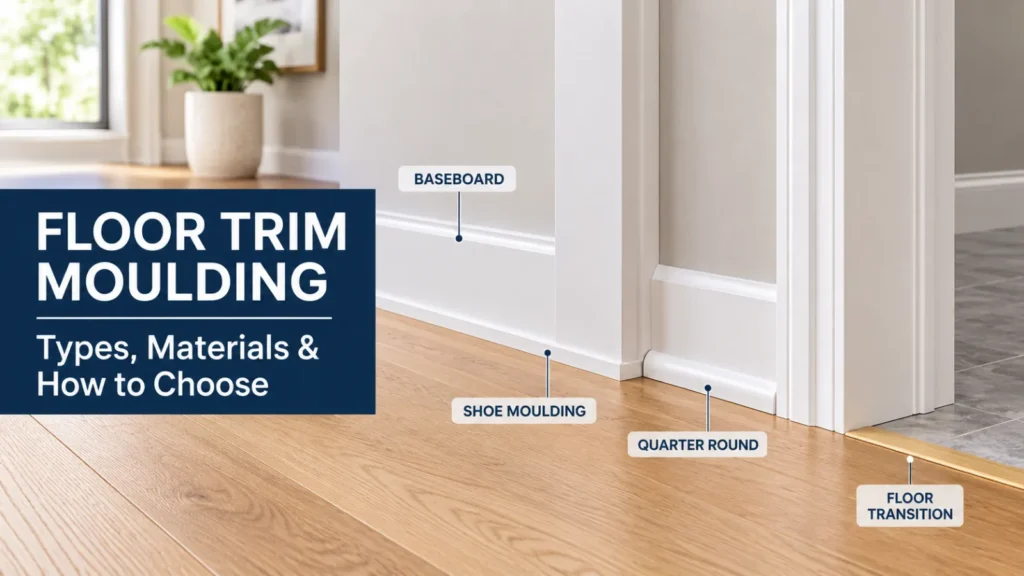
There are a few types to pick from, and they don’t all do the same job. Baseboards finish the bottom of a wall. Shoe moulding covers certain small gaps. Transition moulding sits where two flooring surfaces meet.
So let’s go through the options, what they’re made of and how to choose trim that fits your home.
What Is Floor Trim Moulding?
Floor trim moulding is the finishing material that runs along the bottom of a wall or around the edges of a floor. What it does depends on the type. Some pieces cover the joint between wall and floor. Others finish an exposed flooring edge or join two different surfaces.
Baseboards are the one most people know. They go along the bottom of interior walls, and they also take the scuffs from shoes, furniture, vacuums and mops so the wall doesn’t have to.
Smaller pieces earn their place too. Shoe moulding and quarter round can cover a gap between the flooring and an existing baseboard, and you don’t have to replace the whole baseboard to do it.
You’ll see products sold as floor moulding, floor moulding trim or floor wall trim. Suppliers don’t agree on names, so look at what the piece is actually designed to do.
One thing to keep in mind. Decorative trim won’t fix every gap. If the floor is uneven or the baseboard is loose, deal with that first.
What Are the Different Types of Floor Moulding?
Walk into a home improvement store and the choice can feel messy. Some profiles look nearly the same until you hold them side by side or read what they’re meant for.
Here are the main floor moulding types to know before you buy anything.
Baseboard Moulding
Baseboards run along the bottom of interior walls and create the finished edge between wall and floor. They absorb the everyday knocks that would otherwise mark the paint.
Profile matters more than people expect. A flat baseboard keeps a room simple, while a shaped profile suits a more traditional interior. Height counts as well. A tall baseboard can look great in a big room and feel heavy in a small one.
Replacing old floor board trim? Look at your door casings and other interior details first. You don’t have to match everything exactly, but the styles should sit well together.
LDS Reno offers Baseboard Installation for homeowners updating or replacing their existing trim.
Shoe Moulding
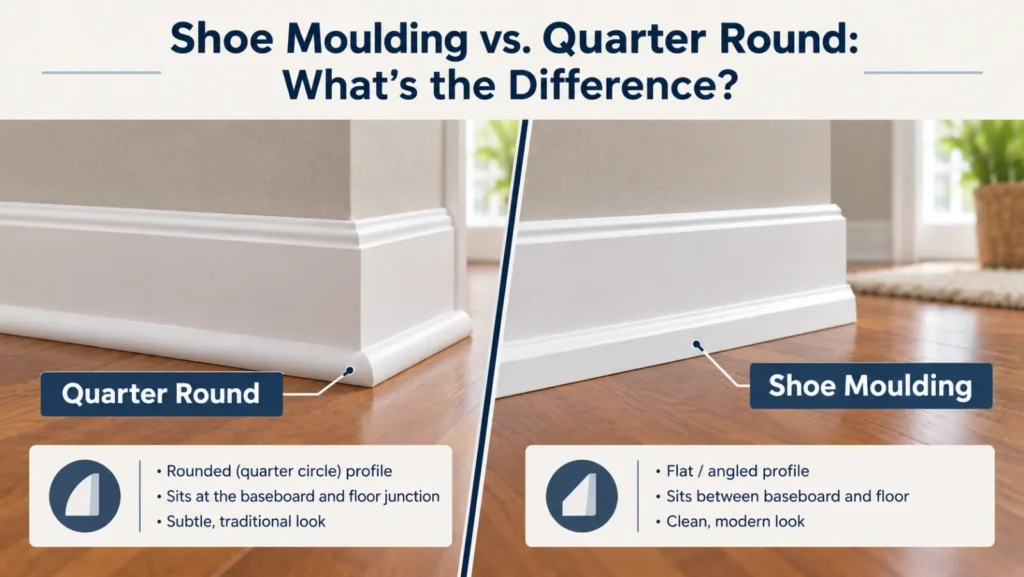
Shoe moulding is a narrow strip that fits against the bottom of a baseboard. It’s often the answer when a small gap is left between the baseboard and the floor.
It helps most after new flooring goes in, especially if the baseboards are staying. Rather than pulling them off and starting over, the right shoe moulding can hide the gap with a lot less mess.
But it has limits. A very wide gap, or a baseboard that fits badly, needs more than a thin finishing strip. Trim over a problem doesn’t make the problem go away.
The slim profile is a plus, too. If you don’t want the bulk of a bigger piece, this is a good option.
Quarter Round Moulding
Quarter round has a curved profile, shaped like a quarter of a circle. It’s used in much the same situations as shoe moulding, though the rounded shape makes it easier to spot.
That fuller look works well with traditional baseboards. With simple, modern trim, though, it can stand out more than you’d like.
So which one makes sense? Start with the gap, then compare the trim to the baseboard you already have. Hold a sample against the wall. You’ll learn more from that than from a product photo.
Our guide to Shoe Moulding vs. Quarter Round explains how the two differ and when each one suits.
Base Cap Moulding
Base cap moulding is a decorative piece that sits on top of a flat board to make a more detailed baseboard. You get an extra layer in the profile without needing one complicated piece of wood.
It turns up a lot in traditional interiors and in homes with decorative door casings and other detailed trim.
Proportion is the trick. If the cap is too big for the board under it, the whole thing looks awkward. Put the pieces together and compare before you settle on a design.
Flooring Transition Moulding
Baseboards finish the bottom of a wall. Transition mouldings do something else. They finish the spot where two flooring surfaces meet, or they handle a difference in height.
Common options are T-mouldings, reducers, end caps and thresholds. Which one is right depends on the flooring materials, their finished heights and the manufacturer’s installation requirements.
Say you’re going from hardwood to tile. That may call for a different profile than a spot where two surfaces sit at about the same height. The product names get confusing, so check what each piece is meant for before you buy.
When you’re choosing trim for flooring, measure the area and work out which materials will meet. Don’t pick a transition piece on looks alone.
Stair Nosing and Stair Trim
Stair nosing finishes the exposed front edge of a stair tread. It’s a different thing from the trim at the bottom of a wall, even though both are finishing details.
The nosing has to suit the stair construction and the flooring material. A piece in the wrong size or profile won’t fit properly, so read the product specifications before you order.
Updating flooring near a staircase? Think about how the two areas will meet. It’s far easier to plan the finishing pieces before the installation is done.
Which Material Is Best for Floor Trim?
Material changes the finished look, how the trim takes paint or stain, and where you can use it. What’s available may also limit your choices.
Solid Wood Moulding
Solid wood moulding has a natural grain, and you can paint it or stain it. It works particularly well when you want hardwood trim that coordinates with wood flooring or other stained finishes in the room.
Don’t expect every piece to look the same. Grain and colour vary, so an exact match isn’t always possible. If the flooring’s already down, compare samples in the room before you choose.
You can paint solid wood, of course. A painted finish often suits the room better than chasing the grain of the floor.
MDF Floor Trim
MDF is a popular choice for painted interior trim. The surface is smooth and it handles simple profiles well. Flat baseboards and other painted moulding are where you’ll see it most.
Watch the moisture. Standard MDF isn’t made for repeated contact with water, and it can swell or break down if it gets wet.
For bathrooms, laundry rooms or other damp areas, read the product’s specifications instead of assuming all MDF trim will do. Moisture-resistant versions may exist, but where you can use them still depends on the manufacturer’s instructions.
PVC and Other Moisture-Resistant Options
PVC trim is worth a look where moisture is a worry. Materials that soak up water behave differently, and PVC doesn’t absorb it the same way, which makes it suitable for certain applications.
That said, not every PVC product fits every room. Check its intended use, the installation instructions and whether the finish works with the rest of your trim.
Engineered Wood Moulding
Engineered wood moulding is another option, depending on how the product is built. Some are designed to go with engineered hardwood flooring.
Read the material details first. Can it be painted? Does it come with a finished surface? Is it made for the room you’re working in?
Those practical details matter more than the label on the package.
How to Choose the Right Floor Trim for Your Flooring
Start with the floor you actually have, not just the profile you like the look of. The trim has to fit the edge correctly and work with how the flooring was installed.
Floor Trim for Hardwood Flooring
With hardwood flooring, stained wood trim can pick up the boards and give the room a consistent feel. Painted baseboards work just as well, especially if you’d like some contrast between floor and walls.
You don’t always need an exact colour match. In fact, trying too hard to match a wood finish tends to make small differences stand out. A finish that goes with your doors or other wood details often looks more natural.
And remember, trim along the wall has a different job than a piece at a doorway. Choose each profile for what it needs to do.
Floor Trim for Laminate and Luxury Vinyl Plank
Many laminate and click-lock luxury vinyl plank floors are installed as floating floors. They need the expansion clearance the manufacturer specifies.
Baseboards, shoe moulding or quarter round can cover that perimeter gap, depending on the installation and how big the gap is. The trim has to be fastened so it doesn’t stop the floor from moving the way it’s meant to.
It’s an easy detail to miss. A piece of trim might hide the gap perfectly and still be wrong if the way it’s attached holds the floor in place.
Before you pick a profile, check the flooring instructions and the clearance they call for.
Floor Trim for Tile and Carpet
Tile and carpet often need a transition piece where they meet another flooring surface. The right product depends on the materials and on whether one surface sits higher than the other.
A reducer may suit a height difference. Another transition profile might work where the surfaces are level. The edge of the flooring affects what will fit, too.
Measure the finished surfaces before you buy. A transition piece that looks right on the shelf may not cover the joint properly once it’s in place.
How to Match Floor Moulding to Your Home’s Style
Look at the trim that’s already there. Door casings, baseboards and flooring all shape how a room looks, and any new profile should make sense next to them.
Modern and Minimalist Interiors
Flat baseboards and simple profiles tend to suit modern interiors. Painted trim can blend into the wall or contrast with it, depending on your colour scheme.
If the room has clean lines, a big rounded piece along the floor might feel out of place. Does that mean you should never use quarter round? No. Just compare the profile with the existing trim before you decide.
Traditional and Heritage-Inspired Homes
Traditional interiors can handle taller baseboards, shaped profiles and decorative details like base cap moulding.
But not every older home needs elaborate trim. A simple profile can look right when it fits the proportions of the room and the casings around it.
In older Toronto and GTA homes, walls and floors often aren’t perfectly straight. Measure the real space. Don’t assume every corner will meet at a clean angle.
Choosing Trim Height and Colour
A tall baseboard makes sense in a room with high ceilings, while a lower profile can feel more balanced in a smaller space. No single height works for every home.
Colour is its own decision. White trim is the familiar pick, but painted baseboards can match the walls, contrast with them or tie in with the rest of the interior. Stained wood is a good fit if you’d like to carry a wood finish through the room.
Not sure? Compare samples in the room. Lighting changes how a colour looks, and a small sample beside the floor tells you far more than a screen does.
How to Handle Gaps Between the Floor and Wall
A gap at the bottom of a wall doesn’t automatically mean the flooring was installed wrong. Some flooring systems need clearance around the edges, and existing walls or floors can be uneven.
For a small gap, the baseboard may already give enough coverage. If it’s staying put and you need a bit more, shoe moulding or quarter round may do the job.
But there’s no point fitting a bigger strip just to hide something that needs a different fix. A loose baseboard, damaged flooring or a gap that changes a lot along the wall should be dealt with before the trim goes on.
Floating floors need extra care. Follow the flooring manufacturer’s instructions so the trim covers the intended gap without restricting movement.
Common Floor Trim Installation Mistakes to Avoid
Trim looks simple. But small fitting errors are easy to spot once the room is finished, and a bit of checking beforehand saves rework later.
Watch for these problems:
Choosing the wrong size: The gap stays visible, or the trim looks oversized beside the baseboard.
Restricting a floating floor: Fastening through the flooring can stop it from moving as intended.
Ignoring uneven walls: A trim piece may leave visible gaps if the wall or floor isn’t straight.
Poorly fitted joints: Uneven corners and rough cuts show up, especially on painted trim.
Measure the gap in a few places. It doesn’t always stay the same along the wall. Dry-fit the pieces and check the corners before you fasten anything.
For projects with baseboards, door casings and other interior details, LDS Reno’s Trim Carpentry service covers this type of work.
When Should You Replace Your Floor Trim?
Cracked trim is the obvious sign. Swelling, loose sections or damaged edges can also leave a room looking unfinished.
Sometimes only one section needs attention. Other times it makes more sense to replace the trim through the whole room, particularly if you’re changing the flooring or the current profile no longer suits the space.
Check what’s underneath before the new pieces go on. If the wall or floor needs work, handle that first and the same problem won’t come back.
Choose Floor Trim That Fits Your Flooring and Your Home
You don’t need a fancy profile to finish a room properly. Sometimes a plain baseboard is plenty. Other times a small finishing strip or a transition piece is the better fit.
What matters is trim that suits the flooring, covers the right edge and looks at home in the room. A little planning before you shop can save you from a profile that’s too bulky, or a piece that doesn’t suit the application.
LDS Reno provides trim carpentry services for homeowners in Toronto and the GTA. Planning to replace your baseboards or update your interior trim? Request a Free Estimate to discuss your project.
Frequently Asked Questions About Floor Trim Moulding
What Is the Trim at the Bottom of a Wall Called?
Usually a baseboard, or baseboard moulding. Shoe moulding and quarter round are smaller pieces that can fit along the bottom of a baseboard to cover a suitable gap.
What Are the Most Common Floor Moulding Types?
The usual ones are baseboards, shoe moulding, quarter round, base cap and flooring transition mouldings. Stair nosing covers the exposed front edge of stair treads.
Is Floor Trim Moulding Necessary?
Baseboards are commonly used to finish the joint between walls and floors, and they help protect the lower wall from scuffs. Whether you need other pieces depends on the flooring system and which edges need finishing.
Should Floor Trim Match the Flooring or the Baseboards?
Either can work. Painted trim can coordinate with the walls or existing baseboards, and stained wood trim can complement hardwood flooring. Look at the other finishes in the room before you choose.
Can You Install New Floor Trim Without Removing the Baseboards?
Sometimes, yes. Shoe moulding or quarter round can cover a suitable gap and leave the existing baseboards where they are. It comes down to the gap and the flooring requirements.
Do Laminate and Vinyl Floors Need Expansion Gaps?
Many floating laminate and click-lock vinyl flooring systems need clearance around the perimeter. Follow the specific manufacturer’s instructions, since requirements vary by product.
What Is the Difference Between Baseboard Moulding and Transition Moulding?
Baseboard moulding finishes the bottom of a wall. Transition moulding finishes the point where two flooring surfaces meet, or deals with a difference in their heights.
What Material Is Best for Floor Trim in Damp Areas?
A moisture-resistant material with the right rating, such as PVC trim made for the intended location, may be suitable. Check the product specifications before using it in a bathroom, laundry room or other damp area.